The Natural Pools of Tenerife: A Guide to the Island's Charcos
Ocean water held in volcanic rock, refilled by the waves, free to swim in. Where the best charcos are, and why the tide decides whether you get in.
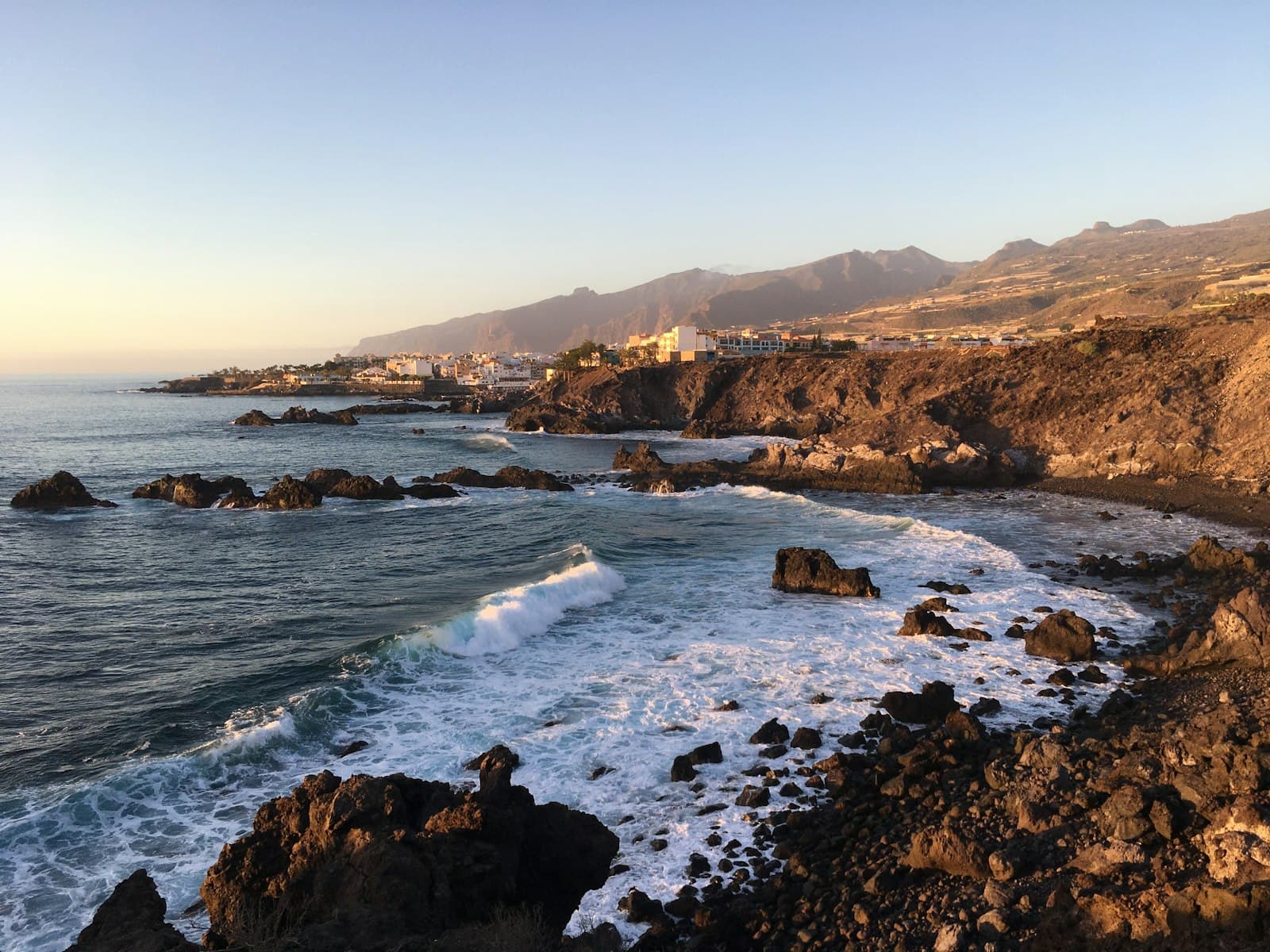
There is a particular kind of swimming that Tenerife does better than almost anywhere: a pool of Atlantic seawater held in volcanic rock, refilled by the waves, with no chlorine, no entry fee and usually no crowd.
Locals call them charcos, puddles. It is an understatement. Some are natural rock basins that filled by accident; others were shaped with concrete decades ago and have since been reclaimed by the sea. All of them are free, and most are better than any hotel pool on the island.
What a Charco Actually Is
When lava meets the ocean it cools unevenly, leaving hollows in the rock. The Atlantic fills them at high tide and drains them slowly, so the water inside is warmer and calmer than the sea a few metres away.
That is the whole appeal: ocean water, ocean views, without the ocean's opinions.
Natural versus improved
Some charcos are untouched. Others, particularly along the north coast, were levelled and edged in the mid-twentieth century, when villages built swimming spots for themselves rather than for visitors. Those often have steps, a handrail and somewhere to leave a towel. They are still free.
Where to Find Them
Garachico is the one to see first. The town was destroyed by a lava flow in 1706, and El Caletón is what the lava left: a series of interconnected pools in black rock, right beside the old town. It is the most photographed set of natural pools on the island and, unusually, deserves the attention.
Bajamar and Punta del Hidalgo, on the north-east coast, have large improved pools facing directly into the Atlantic. On a big-swell day the waves break over the wall, which is spectacular from the side and a bad idea from the inside.
Charco del Viento, near La Guancha, is smaller, wilder and reached down a rough track. Low tide, calm sea, and it is one of the best swims on the island. Rough sea and it is not a swim at all.
El Puertito del Sauzal sits below the town of the same name, a small harbour with pools beside it and a view back along the north coast.
Los Chochos, near Icod, is a set of shallow basins that suit families when the sea is flat.
Timing Is Everything
This is the part most guides leave out, and it is the part that matters.
Tide
Most charcos are at their best around low tide, when the water is contained, clear and calm. At high tide, many simply become part of the sea, and the rock ledges you walked in on are submerged.
Swell
The north coast is exposed. A charco that is a mirror in July can be lethal in February, and the change can happen in a day. If waves are breaking over the outer wall, the pool is not a pool that day.
Time of day
The rock warms through the afternoon and the light softens. Late afternoon is generally the best combination of warm rock, low sun and few people.
What to Bring
- Water shoes. Volcanic rock is sharp, and urchins live in the shallows.
- A towel you do not mind losing to the wind.
- Nothing else. There are rarely facilities, and that is why they are still good.
A Note on Respect
These are village swimming pools that visitors are welcome to use, not attractions. Take rubbish away, do not park across the access track, and if a local family has been coming to the same pool for forty years, they get the good corner.
CanaryMaps lists the charcos worth the drive with exact coordinates, photographs taken on the day, and notes on which ones need a low tide. It is the difference between finding one and hearing about one.